 EN
EN




Exam & Proctoring
For simpler, more secure exam proctoring
Interviewing
For quick, confident, and bias-free talent decisions
AI Agents and Add-ons
Smart Tools for Enhanced Automation and Productivity
For simpler, more secure exam proctoring
For quick, confident, and bias-free talent decisions
Smart Tools for Enhanced Automation and Productivity


Legacy proctoring was built for a pre-AI world. It records sessions, flags anomalies, and escalates for review. But documentation is not prevention. Surveillance does not enforce integrity, and footage alone does not equal proof. These systems observe risk after it occurs; they do not eliminate it.

Modern AI detection tools generate alerts and risk scores at scale. Yet detection without governance is fragile. AI scoring that lacks transparency is difficult to defend, and systems without clear audit trails lack accountability. Tools may identify risk — but they do not establish systemic trust.

Assessment credibility depends on both digital and physical context. Devices are secured, browsers are controlled, and environments are evaluated to prevent unauthorized assistance. The space in which performance occurs must itself be trustworthy.
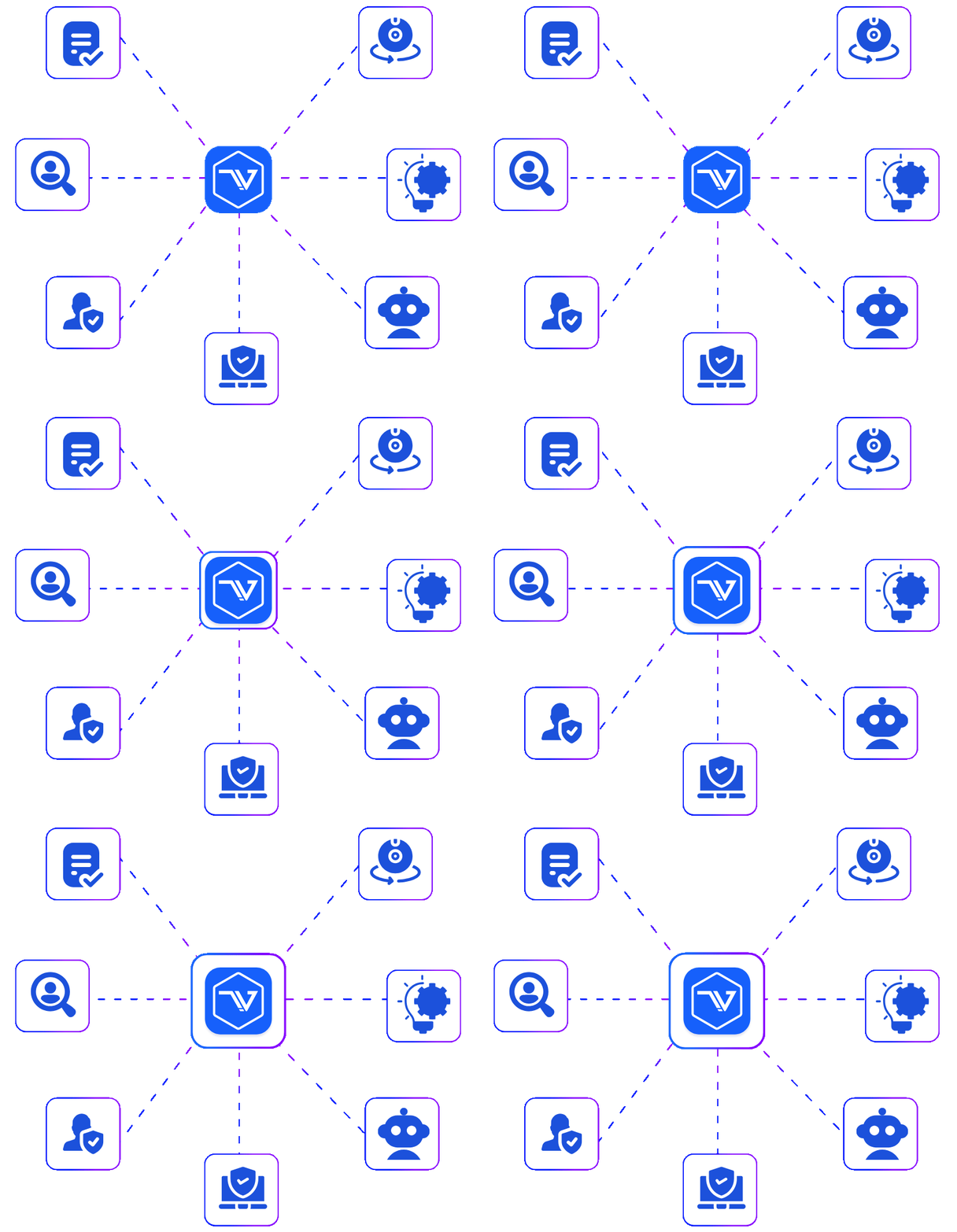
Integrity cannot rely on surface signals alone. Trust Infrastructure analyzes behavioral patterns across sessions, detects anomalies associated with AI assistance, and identifies subtle indicators of coordinated collusion. Trust becomes behavioral, not cosmetic.
AI operates at scale to identify irregularities and generate structured signals. Human experts apply policy, contextual reasoning, and escalation protocols. Every review is documented. Every decision is accountable. Automation is paired with governance.
Every signal is logged. Every intervention is traceable. Every decision is documented within a structured audit trail. Integrity moves from suspicion to substantiated evidence capable of withstanding scrutiny.
.svg)
Stakeholders believe the signal because controls are embedded, continuous, visible, and independently verifiable.
.svg)
Decisions withstand regulatory, legal, and accreditation scrutiny because they are backed by structured evidence and documented enforcement.

Assessment outcomes can be presented as credible proof — supported by traceable records, policy enforcement, and verifiable identity assurance.